2026-10-04 · test
What Local Well Water Tests Reveal in Odessa Florida After Summer Rains
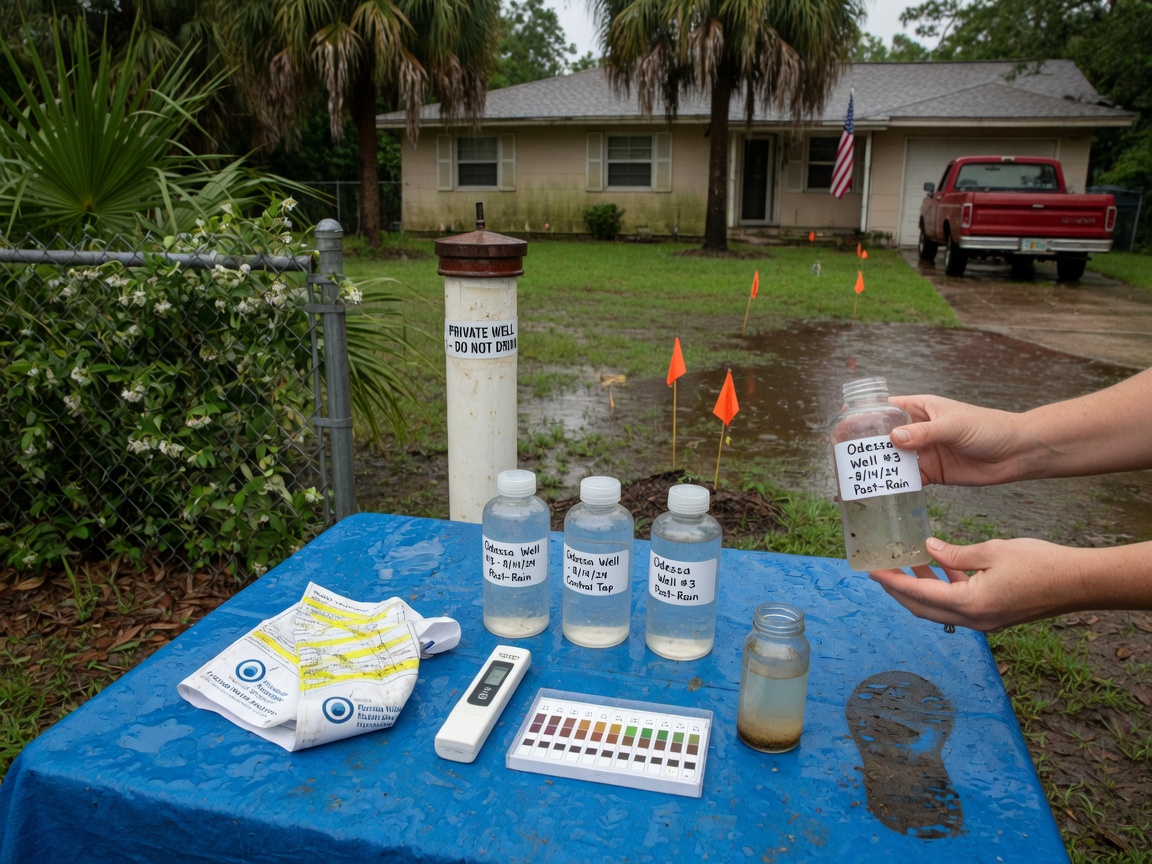
Well water tests in Odessa Florida after summer rains frequently detect elevated coliform bacteria counts and increased turbidity from stormwater runoff entering shallow aquifers across Hillsborough County.
How Summer Thunderstorms Alter Well Water Quality
Frequent afternoon thunderstorms in the humid subtropical climate deliver heavy rainfall that saturates the sandy soils common around Lake Keystone and the Eleanor Hinman Preserve. This saturation allows surface water carrying organic material and bacteria to reach private wells faster than in drier months. Homes in Eagle's Nest and Northdale often see the first changes because many properties sit on older well systems installed before modern casing standards. Tests performed within 48 hours of a storm event commonly register total coliform presence where none appeared in spring samples. Nearby Lutz and Tampa wells show similar patterns when the same weather systems move through the region.
Contaminants Most Often Flagged in Local Tests
Bacterial indicators top the list after prolonged rain, followed by sediment that clouds samples and raises iron or manganese readings. Nitrates can climb when lawn fertilizers wash into recharge zones near Keystone. Wells drawing from shallower depths experience these shifts more than deeper ones because the water table rises quickly during July and August storms. Homeowners who test annually notice the difference most clearly when comparing pre-rain and post-rain lab reports from the same property.
Testing Patterns Across Eagle's Nest, Northdale, and Keystone
Properties along the western edge of Eagle's Nest near Lake Keystone report more sediment issues because of proximity to surface water bodies. Northdale wells, many serving homes built in the 1980s and 1990s, tend to show bacterial rebounds after heavy events if well caps or seals have aged. Keystone residents closer to the preserve sometimes record lower nitrate levels thanks to surrounding natural buffers, yet still see bacterial spikes when runoff travels through drainage swales. These neighborhood differences appear consistently in test results collected by local operators familiar with Hillsborough County geology.
Practical Steps After Receiving Post-Rain Results
Compare the new report against the previous year's baseline to isolate rain-related changes. Retest after 30 days if bacteria appeared, allowing the aquifer time to stabilize. Test Service One provides the targeted analysis needed for these follow-up checks. Review the full report for any secondary indicators such as hardness or pH shifts that affect treatment equipment. How to Read a Septic System Test Report for Odessa Homes Built Before 2000 offers guidance when wells and septic systems sit close together on older lots.
When to Schedule Additional Testing
Schedule a second round of testing after the first major storm of the season and again in early fall once rains taper. Keep records for at least three years to spot trends tied to weather cycles rather than one-off events. Residents in Northdale and Eagle's Nest benefit from testing before and after any nearby construction that could disturb soil and increase sediment load. Consistent monitoring helps distinguish normal seasonal variation from longer-term aquifer changes in this part of Hillsborough County.